
What is Prostate Artery Embolization (PAE)?
Prostate artery embolization (PAE) is a minimally invasive procedure designed to alleviate urinary symptoms resulting from an enlarged prostate. This approach serves as a nonsurgical alternative for men experiencing urinary tract symptoms due to prostate enlargement. Rather than ablating or removing prostate tissue, PAE reduces blood flow to the prostate, starving the gland, and causes the entire gland to shrink up to 50% in size. Notably, unlike other treatments that may have undesirable sexual side effects, PAE does not impact sexual performance or ejaculation. There are typically no long-term sequela of PAE; however, discuss the recovery period and potential complications with your doctor.
Benefits of PAE:
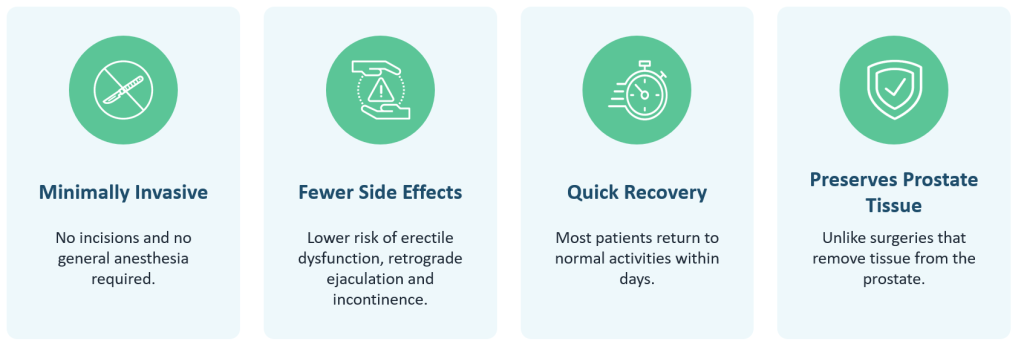
Prostatic Artery Embolization (PAE) offers several advantages over traditional BPH treatments. It is minimally invasive, requiring no incisions or general anesthesia, and has a lower risk of complications like erectile dysfunction, retrograde ejaculation, and incontinence. Recovery time is quick, with most patients returning to normal activities within days. PAE also preserves prostate tissue, unlike surgeries that remove tissue. These benefits make PAE a safer, effective alternative for managing BPH with fewer long-term side effects.
Meet Dr. Brendan LoGiurato – Board -Certified Interventional & Diagnostic Radiologist:
 Dr. Brendan LoGiurato is a board-certified interventional radiologist with extensive training in advanced image-guided procedures. He grew up in the Hudson Valley and earned his Doctor of Medicine with honors from Stony Brook University School of Medicine. Dr. LoGiurato completed his Diagnostic Radiology residency and subsequently his Interventional Radiology fellowship at the prestigious NewYork-Presbyterian Weill Cornell Medical Center and Memorial Sloan Kettering Cancer Center. He is considered a specialist and expert in PAE, treating many patients every month.
Dr. LoGiurato is dedicated to delivering high-quality, patient-focused care, emphasizing precision, safety, and outcomes in minimally invasive treatments. He lives in Dutchess County with his family and prides himself on personalized, longitudinal care for each patient.
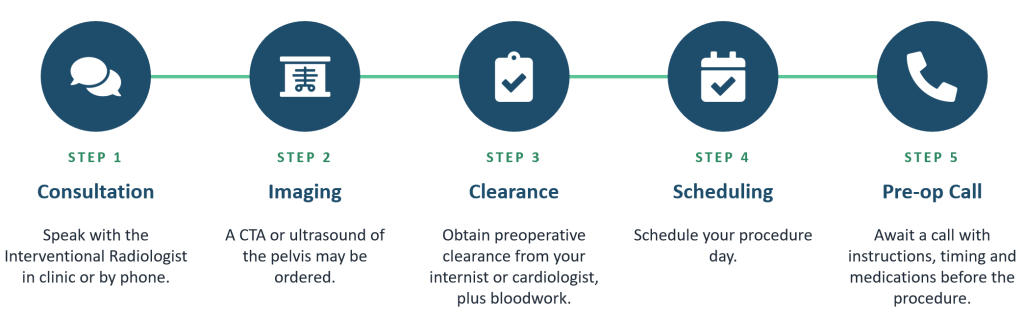
Before PAE – Getting Ready:
During PAE:

An interventional radiologist performs the PAE procedure by inserting a small catheter into an artery in the groin or wrist. They then inject inert particles into the prostate arteries to starve them of blood flow. The procedure is done in the Eastdale office under light/moderate sedation without anesthesia or intubation.
Most PAE procedures take 1–2 hours, but can take up to 4 hours, depending on the complexity of the arteries and other factors. With prep and recovery, the procedure day lasts around 4 hours
After PAE:
PAE is an outpatient procedure, so most patients go home the same day with a driver after the sedation has worn off. You may experience worsening symptoms for 1 week due to inflammation – dysuria (burning), frequency or urination, and low flow. Patients can return to work and light exercise within a few days.

Frequently Asked Questions:
Will I Need a Foley Catheter/Leg Bag?
Most patients do not. About 1 in 10 requires one for several days. If you already have a catheter, removal is attempted in 1 month.
Will PAE Affect Sexual Function?
PAE removes no prostate tissue and does not carry the risk of retrograde ejaculation seen with transurethral surgery or erectile dysfunction seen with prostatectomy.
How Soon Will Symptoms Improve?
Symptoms worsen for 1 week before improving. Most notice improvement at 2 to 4 weeks, with maximum benefit at 3 to 6 months.
How Effective is PAE?
>90% of patients report significant symptom improvement and often discontinue prostate/urinary medications. PAE can also be performed prior to prostate surgery or Aquablation to reduce the risk of bleeding.
How Long Does PAE Last?
Approximately 5 years in 30%, similar to other surgical/transurethral options, with many patients lasting even longer.
Can PAE be Repeated?
Yes, PAE can be repeated if symptoms recur. All medical and surgical options also remain available.
Interested in Learning More About PAE?
Schedule an appointment with Premier Urology to explore your treatment options.
Call: #(845) 437-5000