
For many of us, the frigid conditions of winter can be tough to handle. But this year, freezing temperatures have made it downright difficult to spend long periods of time outdoors. And in case you’ve been wondering—this extreme weather is not our imagination. According to historical weather data, the northeast has been approaching almost record cold this winter, with wind chills dropping between 10 and 30 degrees below zero. And we’re just not used to it. In fact, this period of bitter cold is among the longest stretches of frigid weather since the winter of 1961.*
When this kind of intense weather lingers for days at a time, you might start to ask if your cold feet are just a seasonal nuisance—or a sign of something more serious.
When are cold feet normal?
When it’s cold outside, it’s normal for your feet and hands to get cold while your chest and torso stay warm. Why? It’s the beautiful magic of our bodies protecting ourselves! When we’re out in the cold air, the blood vessels in our extremities, our hands and feet, constrict which enables warmth and blood flow to stay in the more important parts of our body such as our heart and lungs.
And when you leave the cold air to enter a warmer area, you might also find that it takes longer than other areas for your feet and hands to warm up. That’s because your blood must circulate through your limbs and back into your extremities again, which takes time.
The most obvious sign of cold feet is pretty simple—your feet feel cold! But that’s not the only thing you might notice. Some people also feel a mild, throbbing ache in their feet or toes. You might even see changes in skin color, with areas that look pale, red, blue, or purple.
These symptoms are often quite normal when you’re out in the cold. But they’re not something you want to ignore. Frostbite and other cold-weather conditions can develop after spending too much time in freezing temperatures, so it’s important to take precautions. If you plan to be outdoors for any length of time, take simple measures to protect yourself:
- Wear waterproof or water-resistant boots to keep your feet from getting wet
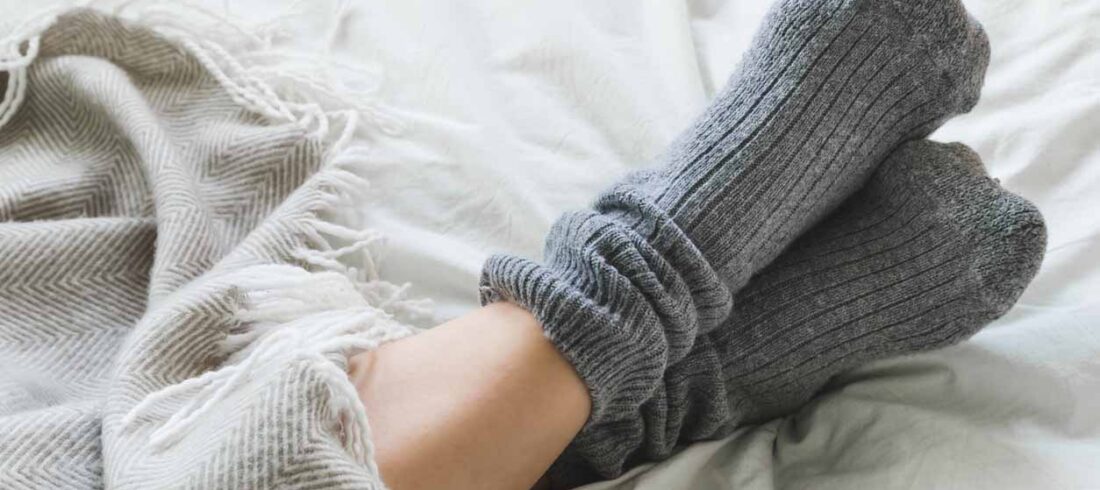
- Put on thick socks made of wool, cashmere, or nylon
- Consider investing in toe warmers or battery-operated heated socks
- Stay active to keep blood circulation at a maximum
When should you be concerned about your cold feet?
It’s worth noting that not all instances of cold feet are a reaction to the weather. If your feet are consistently cold and/or painful, consider talking to a foot doctor (podiatrist) to make sure you’re not suffering from an underlying condition that causes poor blood flow.
Some common disorders that can cause cold feet include:
- Peripheral Artery Disease (PAD). This is a vascular condition where the arteries in your legs, pelvic area or arms become narrowed or blocked due to plaque buildup. This limits the blood flow to your feet and can lead to pain as well as cold feet. Some people with PAD also find that their feet become discolored. When caught early, PAD is treatable.**
- Raynaud’s Syndrome. Raynaud’s syndrome is a disorder that affects the small blood vessels in your fingers and toes. During a Raynaud’s attack, the blood vessels and capillaries in your fingers and toes tighten more than they should. As a result, toes and fingers often turn white or pale from lack of blood flow. Sometimes they may even turn blue or purplish from low oxygen levels, or red when the blood flow returns. By and large, these attacks are in response to cold temperatures or stress, and last about 15 minutes. However, it’s important to note that there are two different forms of Reynaud’s. The primary syndrome may be uncomfortable but is not typically dangerous. The secondary form of the condition is in response to an underlying medical issue, and should be treated by a doctor.***
- Peripheral Neuropathy. Peripheral nerves make up a network that connect your brain and spinal cord to your muscles, skin and internal organs. Damage to these nerves, called peripheral neuropathy, can interrupt communication between your brain and other parts of your body, causing muscle weakness, tingling, and pain in your arms, hands, legs and feet.****
- Hypothyroidism. Also referred to as an underactive thyroid, hypothyroidism means that your thyroid doesn’t release enough thyroid hormone. People who have this condition may find that they feel cold all over, including their feet.
- Other conditions such as anemia, alcoholism, high cholesterol, diabetes and various autoimmune diseases can also affect your circulation, which in turn can cause cold feet symptoms.
For those of us living in the Hudson Valley, winter will not be leaving us any time soon. But there are things we can all do to pamper our feet and keep them cozy and warm. Try wearing socks or slippers. Remember to stretch or move your feet. If you can, take steps to stop smoking because nicotine makes it harder for blood to reach your hands and feet. And consider adding more iron, vitamin B12, and folate to your diet to improve circulation.
Most importantly, if you think your cold feet might be a symptom of a bigger problem, call us. You can schedule an appointment with our podiatry practice at Premier Medical Group at https://www.premiermedicalhv.com/ or reach us at 845-565-4400
*https://wpdh.com/new-york-freezing-temperatures-weather/
**https://www.webmd.com/heart-disease/what-to-know-foot-problems-peripheral-artery-disease
***https://www.webmd.com/arthritis/raynauds-phenomenon
****https://www.mayoclinic.org/diseases-conditions/peripheral-neuropathy/symptoms-causes/syc-20352061