
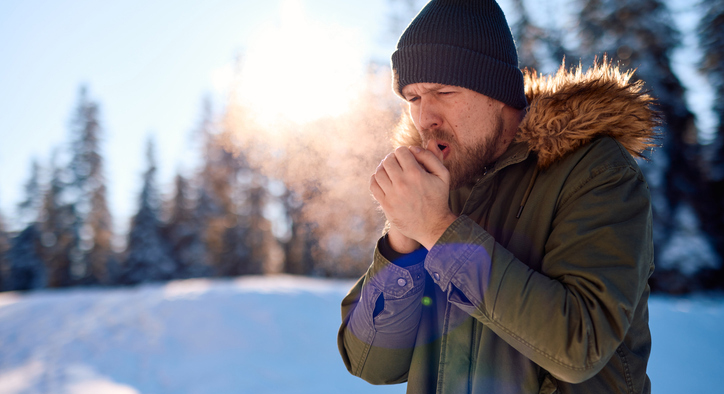
It’s been an unusually cold and snowy winter here in the northeast, and it’s not for the faint of heart. The ice and the bitter cold have made it hard to do regular outdoor activities. But we do them, because life doesn’t stop for the cold weather.
But here’s the thing. Many of us have noticed it can be harder to breathe when we’re outside shoveling snow, attending to errands, or exercising. Why is this? Is it dangerous if we lose our breath or our chest starts to hurt? Here are some important things to know.
What’s normal for winter breathing?
If you experience some discomfort and mild breathing symptoms when you first go outside in very cold air, don’t immediately worry. Frigid temperatures can affect our lungs and it’s not uncommon to experience mild coughing, throat irritation, or an increased effort to breathe when doing outdoor activities.
For most of us, these symptoms are just the natural way our body and lungs adjust to the cold air.* Think about this for a minute. Our airways are protected by a layer of fluid. But cold air is much drier than warm air, so when we breathe it in, this fluid evaporates faster than it can be replaced. This dryness can also cause our airways to become irritated and swollen, giving us that shortness-of-breath feeling. To make matters even more interesting, our airways are also lined with protective mucus, which helps capture unhealthy particles in the air. Well, cold weather also causes your body to produce more mucus than normal, and it’s usually thicker and stickier than normal, which further disturbs our breathing.
But don’t despair—your body is beautifully well-designed to adapt to this cold air. The mild coughing and shortness of breath is a natural reflex that warms and humidifies the cold air we breathe, helping our airways to stay open while keeping our bodies safe. The open airways allow oxygen to once again move efficiently through the bloodstream. So, if you’re just experiencing minor irritation when out in the cold, and it gets better, you typically have nothing to be concerned about.
When is winter breathing not normal?
So how do you know when symptoms warrant medical attention? First off, the symptoms we mentioned above should be short lived. If they’re persistent, or get worse, it’s important to get out of the cold and see a doctor. If the symptoms start to interfere with your daily life, it’s definitely time to call your healthcare professional. But there are other red flags that can indicate something more serious is going on, and they include:
- Chest pain or tightness with breathlessness
- Bluish lips or fingertips, which is a sign of low oxygen levels
- A worsening of symptoms even when you get out of the cold
- Severe wheezing, fatigue, or feeling faint
What if you have pre-existing lung conditions?
Cold air can make things worse for those of us with chronic lung diseases such as obstructive pulmonary disease (COPD), emphysema, asthma, or other lung conditions. We’re more prone to aggravated symptoms in cold weather, and it can take longer for our bodies to adapt to the chilly air.**
But that doesn’t mean we can’t go outside. It just means we need to be prepared and protect ourselves. In most cases, protection means having an extra supply of inhalers for a few days in case of emergency. Or, if you rely on medical equipment such as ventilators, CPAP machines or oxygen concentrators, be sure to have an emergency generator on hand so they can continue to operate in the event of a snow or ice-related power outage.
Helpful tips for everyone
Here are some other tips that can help our lungs when we’re outside in the cold, whether we have pre-existing lung conditions or not:
-
- Breathe in through your nose, exhale through your mouth. Your nose does a better job than your mouth at filtering, warming and humidifying the air you breathe.
- Wear a ski mask or scarf to wrap around your nose and mouth. When you cover your nose and mouth, the warm air we exhale stays trapped, and some of the moisture from our breath actually warms the next breath. This helps our lungs relax and reduces discomfort.
- Limit intense outside exercise. This is important, especially for those with respiratory conditions such as asthma, COPD or other chronic lung conditions. The quick and heavy breathing of cold air can increase symptoms and make it very difficult for the body to adapt and warm the incoming air. So, exercise in moderation when you’re outside.
- Practice gradual warm up. If you’re doing physical activity outside, start with 10-15 minutes of easy exercise before picking up the pace.
- Try steam inhalation. This is a natural remedy that many of us use for nasal congestion when we have a cold, but it also helps to hydrate and soothe dry or irritated airways. Do not overdo it, however—excessively hot temperatures can lead to burns or a worsening of symptoms.
- Stay hydrated. Drink water before and after physical exertion to prevent dehydration and mucus thickening**
With a little extra care and attention, we can all stay safe in the winter wonderland that we’re calling home these days. But be sure to talk to the doctor if you have questions. For more information or to schedule a visit with our internal medicine division, contact Premier Medical Group at https://www.premiermedicalhv.com/ or call us today at 1-888-632-6099
*https://newsnetwork.mayoclinic.org/discussion/is-the-extreme-cold-bad-for-your-lungs/